
Florida Build-to-Rent Loans for Investors Creating Rental Inventory From the Ground Up.
Florida build-to-rent loans for real estate investors, builders and developers constructing residential investment property intended for long-term rental ownership. We evaluate the land, construction plan, completed rental economics, stabilization strategy and permanent capital path as one connected investment.
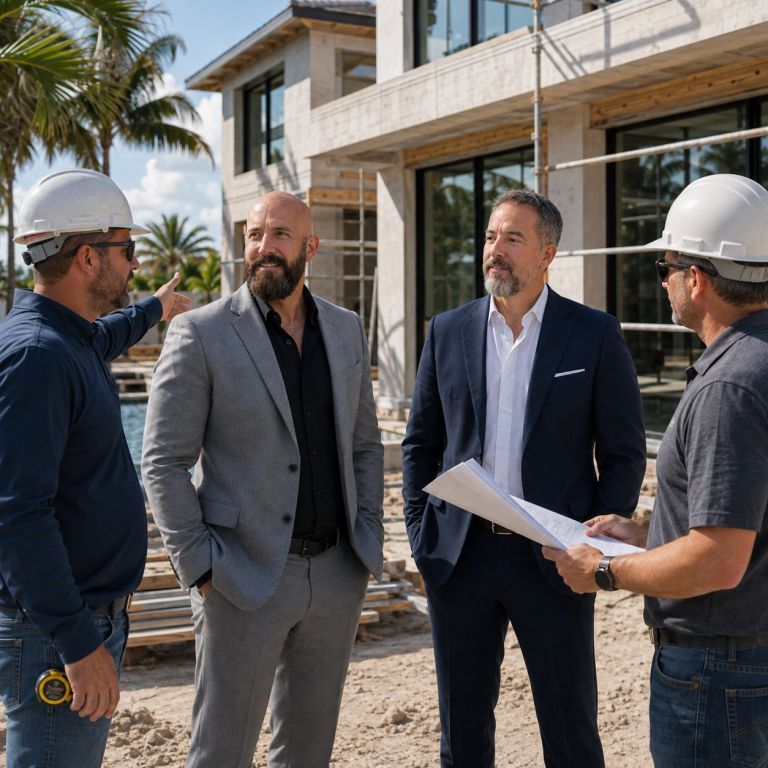
What Is Build-to-Rent Financing?
Build-to-rent financing is business-purpose real estate capital used to construct new residential investment property that is intended to be retained and operated as rental housing after completion rather than immediately sold.
Florida build-to-rent loans sit at the intersection of construction finance and long-term rental strategy. The project must work during development, but the completed asset also needs to support its intended rental income, operating costs and permanent financing.
That makes build-to-rent different from a conventional ground-up construction project built for resale. The development stage may look similar, but the investor's ultimate business plan is ownership and income production.
Once construction and lease-up are complete, the property may transition into longer-term rental property financing or, where appropriate, DSCR financing.
Secure the Site
Establish land control, acquisition basis and development feasibility for the proposed rental project.
Build the Homes
Construct residential inventory according to the approved plans, budget, schedule and contractor strategy.
Lease the Inventory
Move completed units into service and establish occupancy, rents and operating performance.
Stabilize & Hold
Transition the completed rental assets into the appropriate long-term ownership and financing structure.
The Project Is Not Finished When Construction Ends.
For a build-to-rent investor, physical completion is only one milestone. The investment still has to move through lease-up, stabilization and permanent ownership before the strategy is fully executed.
Site & Development
Acquire or control the property, confirm the development plan and establish the project's land basis.
Construction
Execute the build through plans, permits, budget control, contractor management and construction draws.
Lease-Up
Introduce the finished homes to the rental market and build the occupancy and income profile required by the business plan.
Permanent Hold
Stabilize the rental asset and transition out of construction capital into the intended long-term ownership structure.
A Build-to-Rent Deal Has to Work Twice: as a Construction Project and as a Rental Investment.
The project must first survive construction risk and then support the operating assumptions required for long-term rental ownership. Weakness on either side can undermine the investment.
Land & Basis
Land cost, existing equity and development basis establish the starting economics of the project.
Construction Cost
Hard costs, soft costs, contingency and timing determine how much capital is required before the first unit produces rent.
Projected Rents
Rental assumptions should reflect the product, location, competing inventory and realistic local demand.
Lease-Up Plan
The project needs a credible path from completed units to stabilized occupancy and recurring rental income.
Operating Economics
Taxes, insurance, management, maintenance, vacancy and other ownership costs influence the long-term rental outcome.
Permanent Capital
The expected stabilized property should support the refinance or long-term debt strategy planned for after construction.
Build-to-Rent Is Not the Same as Building for Resale.
Two projects can involve nearly identical houses and still have completely different investment economics because one developer plans to sell at completion while the other plans to retain the properties as rentals.
A build-for-sale project is primarily concerned with construction cost, completed value, marketability and sales velocity. A build-to-rent project must also account for achievable rent, lease-up time, recurring operating expenses, permanent debt and long-term portfolio performance.
That difference affects how an investor should evaluate land basis, total development cost and the amount of equity that remains in the completed asset.
Investors developing property primarily for resale should review our broader Florida ground-up construction financing rather than assuming a build-to-rent structure is the right fit.
Same Build
Construction planning and execution may look very similar regardless of the intended exit.
Different Exit
Build-for-sale converts the completed property into cash through disposition; build-to-rent converts it into an operating asset.
Different Economics
Rental income and operating expense become critical because the investor remains exposed to the asset after completion.
Different Capital Exit
Instead of a buyer paying off the construction loan, permanent rental financing may become the capital exit.
When Build-to-Rent Financing May Match the Investment Strategy.
The strongest build-to-rent projects begin with a clear intention to create rental inventory and a credible plan for carrying the completed property into permanent ownership.
Common Build-to-Rent Scenarios
- Construction of new single-family rental investment property
- Small portfolios or multiple units being developed for hold
- Investor-controlled lots intended for new rental inventory
- Developers intentionally retaining completed homes instead of selling them
- Projects with a defined lease-up and stabilization plan
- Completed properties expected to transition into long-term rental financing
Projects That May Need Another Structure
- Owner-occupied or primarily personal-use construction
- New construction intended primarily for immediate resale
- Existing properties requiring renovation instead of new development
- Stabilized rentals that no longer require construction capital
- Projects without a credible rental-demand or lease-up strategy
- Larger-scale apartment development that may require a more specialized multifamily financing structure
The Best Place to Build Is Not Automatically the Best Place to Hold.
Build-to-rent investors have to evaluate both development conditions and long-term rental demand. Land cost, construction cost, insurance, achievable rent, tenant demand and competing inventory can vary dramatically across Florida.
A site with an attractive development basis may still create a weak long-term rental if completed rents do not support the total capitalization. Conversely, a strong rental market can be difficult to develop profitably if land and construction costs overwhelm the operating economics.
JumpStart approaches Florida build-to-rent loans from both sides of that equation: what it costs to create the asset and what the finished asset is expected to produce.
Explore Statewide Florida Private Lending →Start With the Development Plan — Then Show Us the Rental Plan.
Build-to-rent financing requires understanding what is being constructed and what the investor expects the completed rental property to become.
Submit the Project
Provide the site, proposed units, development plan and intended rental ownership strategy.
Review the Build
Evaluate plans, budget, contractor, schedule, land basis and projected completed cost.
Review the Rental Economics
Consider projected rents, operating expenses, lease-up, stabilized value and permanent financing strategy.
Build Toward the Hold
Qualified projects move through closing, construction and the transition toward stabilized rental ownership.
Build the Financing Strategy Before You Build the Property.
Continue into JumpStart's investor-focused resources for deeper context on construction finance, rental-property lending and Florida private real estate capital.
Florida Real Estate Lending Knowledge Center
Investor-focused education covering development capital, rental financing and real estate lending strategy.
Visit the Knowledge Center →Private Lending FAQ
Direct answers to broader questions about business-purpose private real estate financing.
Browse Lending Questions →Florida Private Lending
Explore JumpStart's statewide approach to financing investors, builders and Florida real estate operators.
Explore Florida Lending →Florida Build-to-Rent Loan Questions.
Direct answers to common questions investors and developers ask when creating new residential rental inventory in Florida.
What are Florida build-to-rent loans used for?
Florida build-to-rent loans are used for qualifying business-purpose projects where an investor or developer is constructing new residential property intended to be retained and operated as rental real estate.
How is build-to-rent different from ordinary construction financing?
The construction phase can be similar, but the intended exit is different. A build-to-rent investor plans to hold and operate the completed property rather than rely primarily on a sale at completion.
What happens to the construction loan after the homes are completed?
The investor generally needs a defined capital exit. Depending on the property and program, that may involve refinancing into an appropriate long-term rental or DSCR financing structure.
Why does projected rent matter before construction begins?
Because the project is being built for rental ownership, the expected stabilized income needs to support the completed property's operating costs, capitalization and permanent financing strategy.
Can build-to-rent financing be used for multiple homes?
Qualified build-to-rent projects may involve multiple residential units or properties. Eligibility and structure depend on the project scope, borrower, development plan and applicable program.
Does JumpStart provide build-to-rent financing throughout Florida?
JumpStart provides business-purpose real estate financing across major Florida investment markets, subject to project, property, borrower, underwriting and program eligibility.
Show Us What You're Building — and How the Finished Rentals Will Perform.
Send us the land or project, unit plan, construction budget, projected rents and long-term ownership strategy. We will review the transaction and determine what available business-purpose financing path may fit.