
Construction Loans Built Around the Project From Dirt to Exit.
Business-purpose financing for Florida real estate investors, builders and developers constructing investment property from the ground up. We evaluate the land, plans, budget, construction execution, completed value and exit as one connected project.
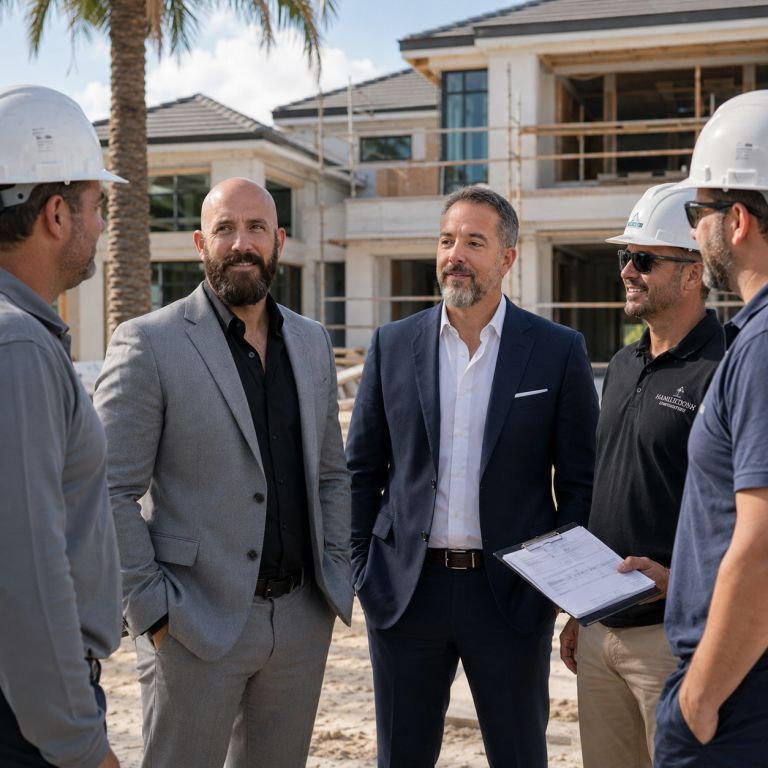
What Is a Ground-Up Construction Loan?
A ground-up construction loan is business-purpose real estate financing used to fund the development of a new investment property where construction begins with vacant land, a cleared site or a project requiring substantially new improvements.
Unlike financing for an existing stabilized property, construction lending must account for a property whose value and physical improvements change throughout the loan term. The lender therefore evaluates not only the finished asset, but also the plans, entitlements, budget, contractor, borrower experience, draw schedule and completion strategy.
A project involving an existing house with a renovation scope may fit better under fix-and-flip financing. A completed rental project may later transition into DSCR financing, rental-property financing or another permanent capital structure.
Site & Land
Start with the parcel, acquisition basis, site condition, zoning and development readiness.
Plans & Budget
Plans, specifications and line-item costs define what is being built and the capital required to complete it.
Construction
Contractor capability, draw administration, timing and project management drive execution during the build.
Completion & Exit
The completed property needs a practical destination through sale, refinance, lease-up or long-term ownership.
A Construction Loan Finances a Process — Not Just a Finished Building.
The project moves through multiple stages before the real estate reaches its completed form. Each stage can affect cost, schedule, collateral position and the ultimate investment outcome.
Control the Site
Establish ownership or acquisition terms, land basis, zoning, access, utilities and development feasibility.
Define the Build
Finalize plans, specifications, permits, contractor pricing, construction budget and expected completion timeline.
Execute Construction
Advance through construction milestones while managing draws, inspections, schedule, cost controls and field execution.
Complete the Strategy
Sell the completed asset, refinance into permanent debt or place the property into its intended operating strategy.
The Finished Value Matters. So Does Everything Required to Get There.
Construction financing introduces execution risk that does not exist in the same form on a completed property. The project must make sense on paper and remain executable in the field.
Land & Basis
Site value, purchase price, existing equity and the investor's total basis establish the foundation of the transaction.
Plans & Permits
Project readiness, approved plans, permitting status and other preconstruction requirements influence timing and execution risk.
Construction Budget
Hard costs, soft costs, contingency and the completeness of the line-item budget affect the capital required for completion.
Builder & Experience
Relevant construction experience, contractor capability and the project-management structure can materially affect execution.
Completed Value
The projected finished property value should be supported by the actual product, location, market and realistic comparable data.
Completion & Exit
The loan ultimately depends on completing the project and moving into a credible sale, refinance or operating strategy.
Construction Capital Is Commonly Released as the Project Advances.
Construction financing frequently involves staged disbursement rather than releasing the entire construction budget at closing. Capital is typically tied to completed work, inspections or defined project milestones under the applicable loan structure.
This helps keep the funded loan balance aligned with construction progress and provides a framework for monitoring whether the project is moving according to plan.
Borrowers should understand their specific draw process before construction begins, including documentation requirements, inspections, timing and how contractor payments will be managed.
A realistic project must also account for working-capital needs, timing differences and unexpected field conditions rather than assuming every dollar will arrive precisely when a contractor invoice becomes due.
Budget
Establish the approved project cost structure before construction capital begins moving.
Complete Work
Advance the project through defined construction phases and measurable field progress.
Verify
Inspections or documentation may confirm completion of work according to the applicable draw process.
Advance Capital
Approved construction funds move as the project advances under the loan's draw structure.
When Ground-Up Construction Financing May Fit.
Construction capital belongs on projects where the primary investment strategy is creating a new physical asset — not simply repairing an existing one.
Common Construction Scenarios
- New single-family investment-home construction
- Investor or developer-controlled land with a defined build plan
- Residential infill development in established Florida markets
- Construction intended for resale after completion
- New rental inventory that may eventually transition into long-term rental financing
- Qualified build-to-rent development strategies
Projects That May Need Another Structure
- Owner-occupied or personal-use residential construction
- Existing properties requiring renovation rather than true ground-up development
- Rehab-and-resale projects better aligned with fix-and-flip financing
- Stabilized properties requiring only long-term debt
- Projects without sufficiently defined plans, budget, contractor or completion strategy
- Transactions where cost and schedule assumptions do not support the completed-property economics
Construction Risk Is Local Long Before the Building Is Finished.
Florida construction projects operate inside local zoning, permitting, labor, insurance, impact-fee, material and market environments. Those conditions can affect both cost and timeline.
A Miami infill project may face a different land basis and construction environment than development in Orlando, Tampa, Jacksonville, Port St. Lucie, the Space Coast or Southwest Florida.
The investment thesis must therefore connect site acquisition, construction cost and finished value to the realities of the specific Florida market where the project is being built.
Explore Statewide Florida Private Lending →Bring Us the Project, Not Just the Address.
Construction financing begins with understanding what exists today, what will be built, how much it should cost and how the completed project is expected to create value.
Submit the Project
Provide the site, acquisition details, proposed build and intended investment strategy.
Review Plans & Budget
Evaluate project readiness, scope, costs, contractor and proposed construction timeline.
Underwrite the Build
Review land basis, projected cost, completed value, borrower, execution plan and exit.
Build & Draw
Qualified projects move through closing and the applicable construction draw process.
Strong Construction Deals Begin With Strong Assumptions.
Continue into JumpStart's investor-focused resources for deeper context on private capital, development financing and Florida real estate lending.
Florida Real Estate Lending Knowledge Center
Investor-focused education covering private capital, project financing and real estate lending strategy.
Visit the Knowledge Center →Private Lending FAQ
Direct answers to broader questions about business-purpose private real estate financing.
Browse Lending Questions →Florida Private Lending
Explore JumpStart's statewide approach to financing Florida investors, builders and real estate operators.
Explore Florida Lending →Florida Ground-Up Construction Loan Questions.
Direct answers to questions real estate investors and builders commonly ask about financing new construction projects.
What does a ground-up construction loan finance?
Ground-up construction financing is used for qualifying business-purpose projects where an investor or developer is creating a new real estate improvement rather than simply financing an existing stabilized building.
Are construction funds released all at once?
Construction financing commonly uses a draw process in which approved project funds are released as work progresses according to the applicable loan documents, inspections and procedures.
Why does builder experience matter?
Ground-up projects involve budgeting, scheduling, contractors, permitting and field execution. Relevant experience can help demonstrate the ability to complete the project as proposed.
Is ground-up financing the same as a fix and flip loan?
No. Fix-and-flip financing is generally centered on improving an existing property. Ground-up construction financing addresses projects where new improvements are being built from the site up.
Can a completed construction project become a rental?
Yes. Some investors build for resale while others construct property for a rental hold strategy. A completed rental project may later require DSCR, rental-property or another permanent financing structure.
Does JumpStart finance ground-up construction throughout Florida?
JumpStart provides business-purpose real estate financing across major Florida investment markets, subject to project, property, borrower, underwriting and program eligibility.
Show Us the Site. Show Us the Build. Show Us the Exit.
Send us the property or land, construction plan, budget, timeline and investment strategy. We will review the project and determine what available business-purpose financing path may fit.